
SAFETY FIRST, ALWAYS
Families for Safe Streets Framework for Autonomous Vehicles
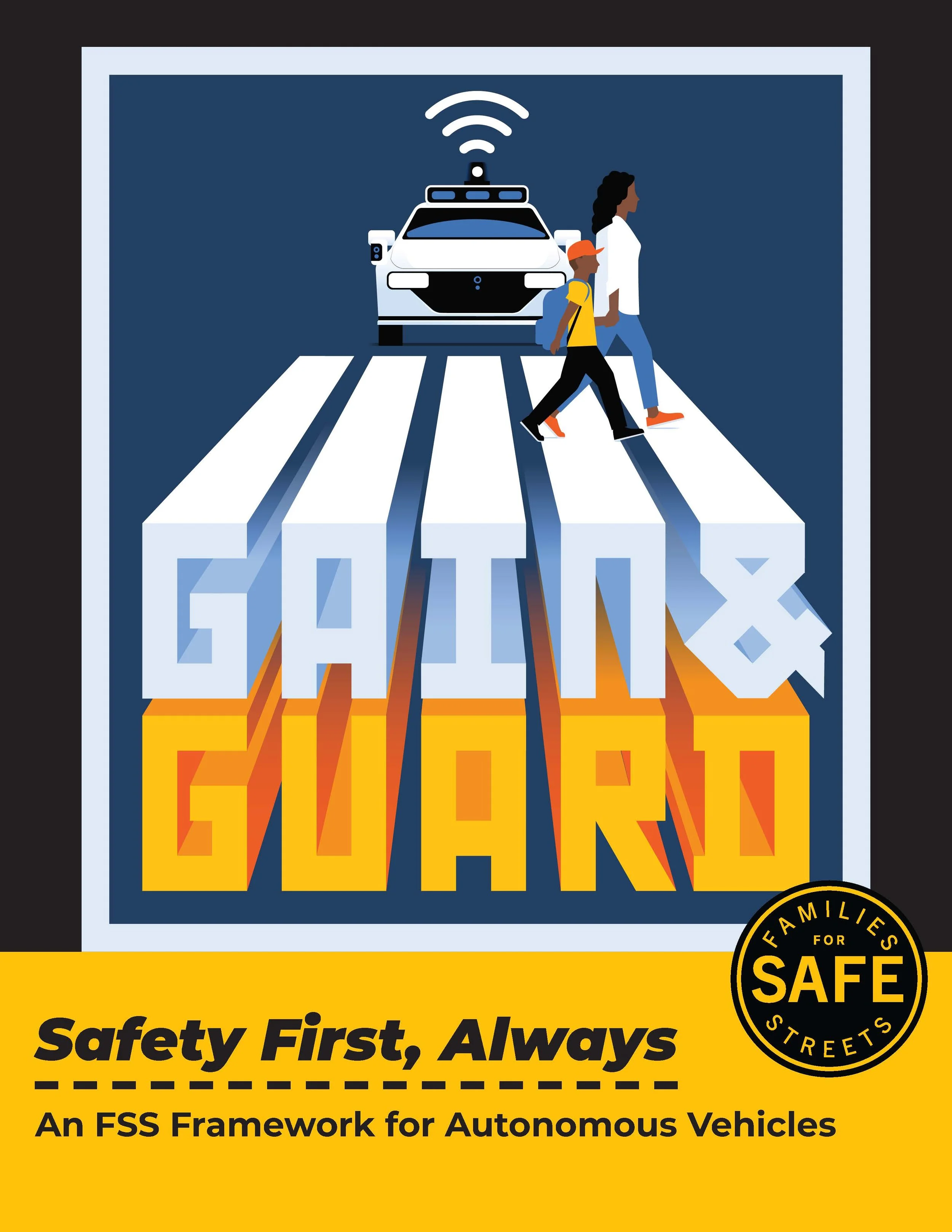
WHITE PAPER RELEASE
Today, autonomous vehicles (AVs) are transitioning from experimental technology to real-world deployment. Driverless vehicles are already operating in U.S. cities, and expansion is expected in the coming years. The decisions policymakers make today will shape how these technologies affect public safety for decades.
The central question is not whether autonomous vehicles will exist but what form they will take: how safe they will be, whose interests they will prioritize, and whether they will strengthen or undermine a broad set of public needs.
Families for Safe Streets (FSS) evaluates AV safety policy through ten core foundational principles centered on human life, safety, accountability, and transparency.
On June 24th, FSS will unveil our bold, principles-driven framework for AV safety policy — built with families, advocates and policy experts.
Enter your email address below to download our white paper. We will keep you informed about autonomous vehicle safety, emerging policy solutions, and Families for Safe Streets' work to end the epidemic of traffic crashes.
VOICES ON THE FRAMEWORK
-
VOICES ON THE FRAMEWORK -
“Every crash is a family changed forever—mine included. We cannot accept a system where life-saving technology is released under weaker standards than aviation or medicine. Autonomous vehicles must be held to a level of safety that prevents tragedy before it happens, not one that responds after lives are already lost.
- Amy Cohen, Founder and President, Families for Safe Streets
“FSS has developed a novel, bold framework intended to elevate an important but sometimes overlooked goal in robotaxi regulation—safety, especially the safety of non-users. This framework adds a tool to help us think about the tradeoffs of new tech vs. the status quo along multiple dimensions.”
-Greg Shill – Professor of Law, Arizona State University
“Humans are dangerous drivers. The promise of this technology is machines that do dramatically better than humans, and a serious safety framework should demand exactly that. I find the Gain & Guard Rule compelling because it sets a bar with teeth: it's a standard some systems already clear and others plainly don't, which makes it meaningful.”
– Andrew Miller, co-author of The End of Driving, and author of the Substack newsletter Changing Lanes
"This is an impressive exploration of what it will take to ensure the autonomous vehicle industry delivers on their promises of improving road safety.
– Phil Koopman, author of Embodied AI Safety and How Safe is Safe Enough?, and the Substack newsletter Autonomous System Safety
“Families for Safe Streets, formed out of tragic necessity, is once again at the forefront of developing and advocating for practical, real world solutions to make our streets safer and save lives. Requiring autonomous vehicle companies to collect and share standardized, detailed data, contribute to the cost of infrastructure upgrades, and meet safety standards grounded in the principles of Vision Zero are critical components of the Families for Safe Street’s framework. These measures help ensure that autonomous vehicle technology works for people, not the other way around.
— Meera Joshi, President of Green-Wood Cemetery; former Deputy Mayor of Operations, City of New York; and Chair & Commissioner, New York City Taxi & Limousine Commission
WATCH OUR LATEST webinar
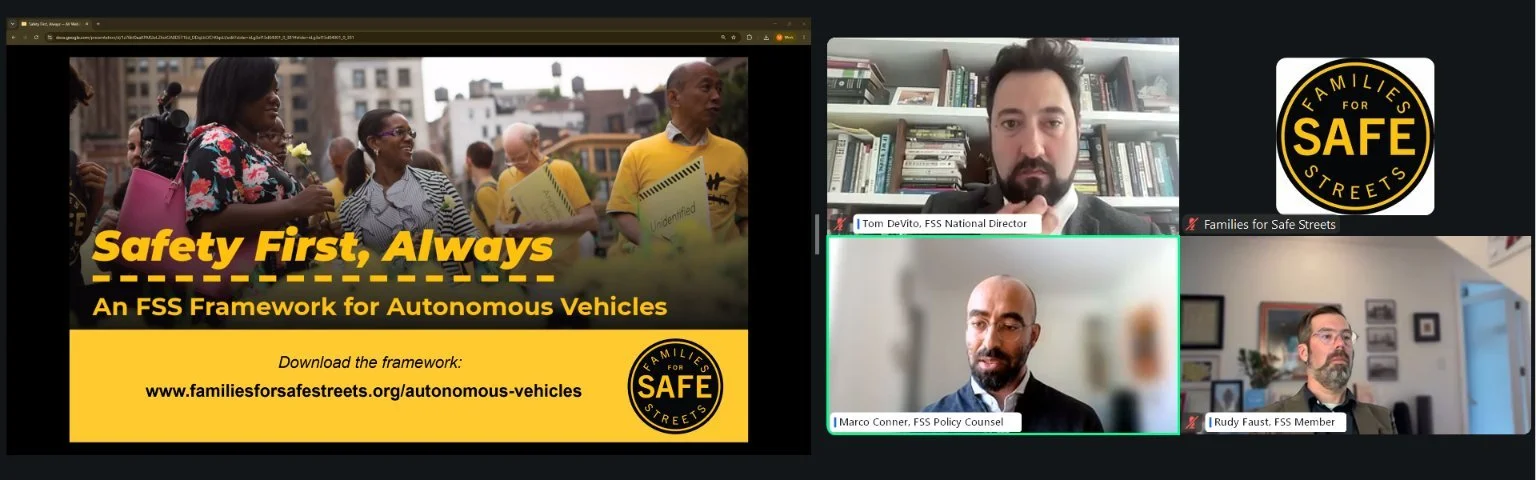
Learn more about our bold, principles-driven framework for how autonomous vehicles should be regulated, certified, and truly built to advance the public interest.
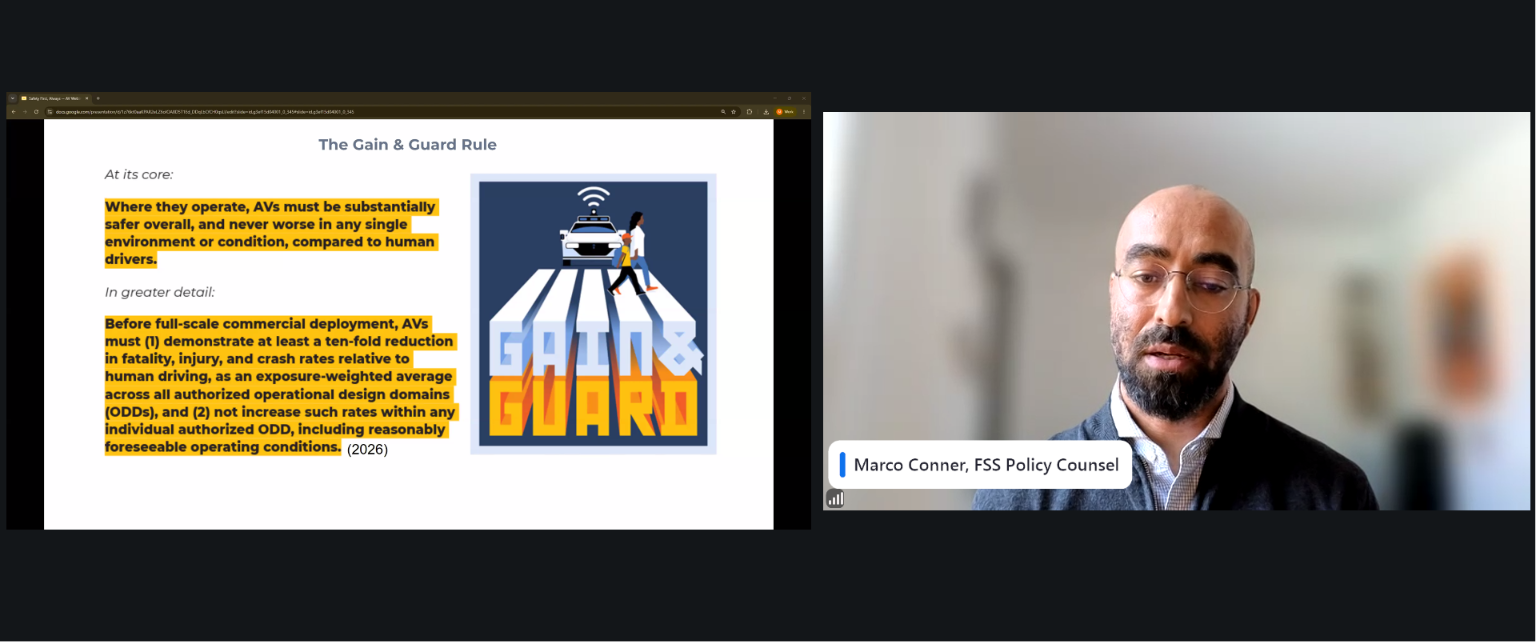
IN THE NEWS
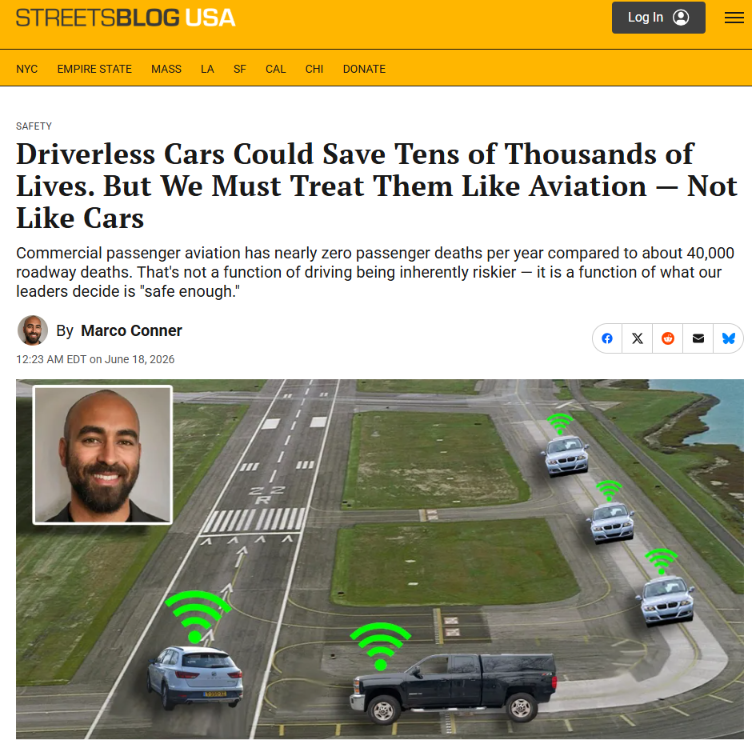
“The standard must not be ‘as safe as human drivers.” It must be to set us on a trajectory toward eliminating traffic deaths. That is what commercial aviation has largely achieved. It is what we must require of AVs.”
— Marco Conner, Policy Counsel